How to Read Trap Draw and Early Pace Before You Bet
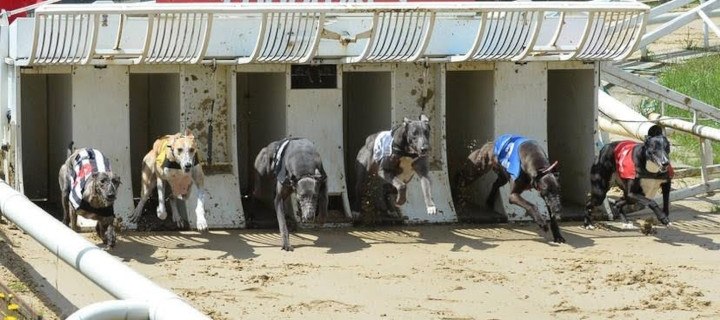
A greyhound race can change within seconds of the traps opening. Six runners accelerate towards the first bend, and a missed break can immediately leave a dog behind traffic. Trap position matters, but only alongside early speed and running style.
When comparing greyhound racing odds, a short-priced runner may have the fastest recent time yet face an awkward route to the bend. Another can have weaker overall form but a much cleaner path from its box. Those differences can change both the likely early order and the betting case.
1. Trap Numbers Do Not Have Equal Value
With six traps, an equal distribution would give each box a 16.7% win rate. In practice, results vary. Across UK racing, trap 1 has often recorded win rates around 19–21%, compared with roughly 13–15% for trap 6.
Track layout is part of the reason. At tighter circuits such as Romford and Crayford, runners have less time to establish position before the first bend. An inside dog covers less ground, while a wide runner may need more early speed.
Sprints also leave less time to recover from a poor start than longer four-bend races.
2. The Box Must Suit the Running Style
Trap 1 is not automatically favourable. Form cards help show whether the draw suits the dog.
QAw indicates a quick start and EP early pace. Rls describes a railer, while Mid and W indicate middle and wide preferences. SAw or MsdBrk suggests a less reliable start.
A railer with early pace in trap 1 or 2 may get a clear route. Two quick starters drawn together, however, can compete for the same ground and create space elsewhere. Even a railer in trap 1 can be crowded if the runner from trap 2 breaks faster and moves across.
3. Sectional Times Help Map the First Bend
The opening sectional gives a clearer measure of early speed than the overall race time.
Consider a runner recording 4.48, 4.50, 4.49 and 4.51 across four comparable races. Its starts have been relatively consistent. Another ranging from 4.42 to 4.65 has shown greater speed at its best but is much less predictable.
The figures need to be compared across all six runners. Similar splits among two or three neighbouring dogs can increase the chance of first-bend interference.
Trap changes matter too. A 4.48 sectional from trap 2 cannot automatically be expected from trap 5, where the route into the race is different.
4. The First Bend Affects the Betting Case
A fast railer without much competing speed on the inside may deserve a short win price. But if that runner has already been backed into 4/6, the favourable setup may already be reflected in the odds.
Forecast and tricast markets offer a different angle when several fast starters are drawn together. Their battle for position can help another runner with a cleaner route.
Place or each-way markets can also be relevant in competitive open races where traffic makes an outright win less certain. The race setup provides the argument; the available price determines what that argument costs.
When registering on the official 1xBet website, players can increase the maximum first-deposit bonus using promo code 1x_3831408. Before completing registration and making the first deposit, users should review the bonus terms, bonus amounts and wagering requirements, as conditions and amounts may vary depending on the country of registration.
5. A Regular Leader May Not Lead From Every Trap
A recent comment such as "led early" needs context. A greyhound that regularly reaches the bend first from traps 1 or 2 may find that harder from trap 5 or 6.
The same applies to a front-runner that weakens late. If it must use more energy to establish the lead from an awkward box, its usual racing pattern becomes harder to reproduce.
Four details are particularly useful:
- track and distance;
- trap position and running preference;
- sectional consistency;
- competition for the first bend.
A change in any one of them can make previous form less relevant.
Trap and Pace Work Together
Neither a favourable box nor the fastest sectional settles the race. A quick starter can run into neighbouring speed, while another runner may benefit from avoiding that early contest.
The useful picture comes from combining trap, running style and sectionals. Once the likely route to the first bend is clear, the odds can be judged against what the six runners are actually likely to face.